
Dog Health Monitoring Collars: Complete Guide to Smart Pet Tracking

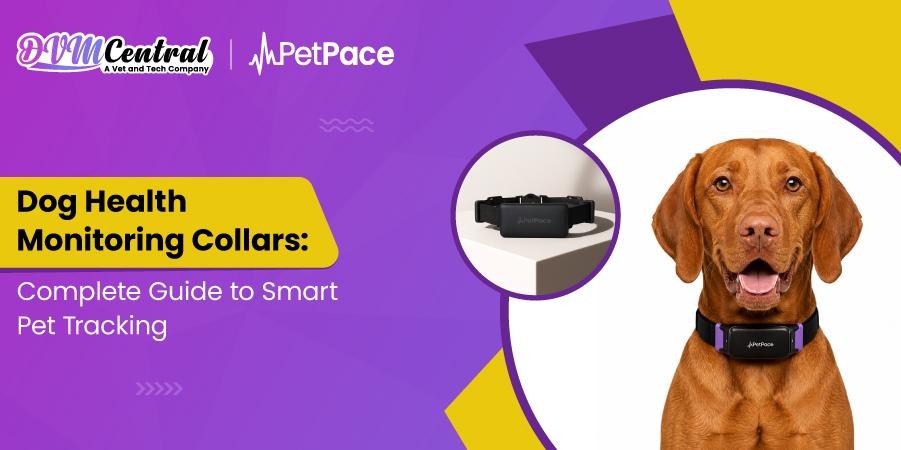
Dog health monitoring collars use built-in sensors to track a dog’s activity, location, and health data such as heart rate and body temperature. These devices play a vital role in monitoring the overall health of pets by recording everyday activity and health-related data. Pet owners and veterinarians can benefit from dog health monitoring devices in order to get a better picture of changes in a dog’s routine and overall wellness.
In this guide, we’ll look at how pet health monitors work. We will also highlight what pet monitors can detect and what to consider when choosing one.
What is a Dog Health Monitoring Collar?
A dog health monitoring collar is a wearable device that attaches to a regular collar or comes as part of the collar itself. It has built-in sensors to collect and record information about your dog’s activity, movement, and location. Smart pet trackers work much like fitness trackers, with some models also collecting data related to a pet’s health.
Why Dog Health Monitoring Collars Matter
Dogs can be surprisingly good at hiding pain, which can make it hard for owners to tell when something is wrong. A change may start with something small, such as less walking or longer naps. Over time, these changes may become easier to notice.
A health monitoring device gives pet owners another way to keep track of those daily patterns. By checking the activity and health data collected by the device, they can spot something out of the ordinary and share those details with their veterinarian, giving the vet more information to work with when deciding what to do next.
These dog health trackers can be useful for:
- Senior dogs at risk of arthritis or organ disease
- Dogs with conditions like cognitive decline are also at risk
- Dogs recovering from surgery or injury
- Working and sporting dogs whose owners want to fine-tune conditioning
- Anxious or reactive dogs where behavioral patterns matter for training
- Multi-pet households where owners want to keep tabs on more than one animal at once
For veterinary practices, data from a health monitor can also give owners something more concrete to share during follow-up visits. Activity levels and other tracked information can provide useful context alongside the owner’s observations.
How Does a Dog Health Monitoring Collar Work?
Dog health monitors use sensors for tracking and recording activity and health conditions. The device then transmits that information to an app or web dashboard that translates it into easy-to-understand activity trends and alarms.
The process usually works in four steps:
Step 1: Data is Collected via Sensors
The collar has sensors that track your dog’s movement and activities. These could include an accelerometer, gyroscope, GPS, or heart rate sensor.
Step 2: Data is Transferred To an App
The collar transmits the data to an app on your phone. It will employ Bluetooth, Wi-Fi, or a cellular network, depending on the device.
Step 3: The App Processes the Data
The software breaks down the information into actions like walking, running, sleeping, scratching, or shaking. It can also monitor activity levels, rest time, and distance covered.
Step 4: Alerts and Reports
The app displays data as daily summaries, infographics, or trends. Some collars also notify you if they detect a change in your dog’s normal activity.
The functionality of pet health monitoring collars depends on their sensors and software, along with the type of data used to train the system. The results can also vary between dogs because breed and coat can affect how the device collects movement data.
What Types of Dog Health Monitoring Collars Are There?
There are four general categories of dog tracking collars, and many products on the market combine features from more than one category.
|
Type |
Primary Function |
Best Suited For |
Limitations |
|
GPS Tracking Collars |
Real-time location tracking and geofencing. Route history can also be monitored. |
Dogs prone to escaping, off-leash adventures, lost pet recovery |
A higher cost, more frequent charging, and cellular subscription fees for GPS tracking |
|
Activity and Fitness Monitors |
Step counts, distance, calories, active versus rest time |
General wellness tracking, weight management, conditioning |
Cannot detect internal vital signs; accuracy varies with collar fit |
|
Vital Sign and Biometric Monitors |
Heart rate, respiratory rate, temperature, sometimes HRV |
Senior dogs, dogs with chronic conditions, post-op recovery |
More expensive; may require closer, more consistent collar contact with skin |
|
Combined GPS and Health Monitors |
Location tracking plus activity and, in some models, biometric data |
Owners who want one device for safety and wellness |
Higher price point, more data to interpret, sometimes requiring a subscription |
How Do Sensors in Dog Health Monitoring Devices Work?
Dog health monitoring devices use different sensors to collect information about movement, location, and physiological measurements. The sensors included depend on the type of device and the health data it is designed to track.
Here are the main sensors found in dog health monitoring collars and what they measure:
- GPS sensor: Uses signals from GPS satellites to determine a dog’s location. It locates route history and track distance traveled, It also supports geofencing.
- Accelerometer: Detects movement, speed, and changes in motion. It can help track walking, running, playing, resting, scratching, sleeping, and overall activity levels.
- Gyroscope: Measures rotation, orientation, and changes in direction. It can add more detail to movement data when paired with an accelerometer.
- Optical heart rate sensor: Uses light to detect changes in blood flow associated with each heartbeat. It can measure heart rate and, in some devices, provide data for calculating heart rate variability.
- Electrical heart sensor: Detects the heart’s electrical activity. This can provide heart rate and other cardiac measurements.
- Temperature sensor: Measures skin or surface temperature. Depending on the sensor and device design, this may include a thermistor, infrared sensor, or thermopile sensor.
- Respiratory sensor: Tracks breathing-related movement to estimate respiratory rate. Some devices use an accelerometer, while others may use dedicated pressure, motion, or other sensing technology.
- Pressure sensor: Detects changes in pressure or contact and may be used in some devices to capture breathing or body movement data.
- Proximity sensor: Measures the distance between the device and nearby objects. When dealing with wearable technology, it can be used to verify the proper wearing of the device or to detect changes in placement.
All these sensors provide different types of data. A basic activity monitor may rely mainly on an accelerometer, while a more advanced veterinary health monitor may combine GPS, motion sensors, heart rate sensors, and temperature sensors in one device.
What Can a Dog Health Monitoring Collar Detect?
A dog's health monitoring collar can track changes in activity and rest and, with some models, heart rate, breathing, and temperature. These changes can give owners useful information about their dog’s usual routine and highlight patterns that may need a closer look.
Commonly tracked changes include:
- Reduced activity or reluctance to move
- Increased scratching or licking
- Changes in sleep or rest patterns
- Higher resting heart rate
- Changes in breathing rate
- Changes in skin temperature
- Excessive panting while resting
These collars are best viewed as digital tracking tools rather than diagnostic devices. The recorded changes in a dog’s usual patterns can indicate underlying problems that pet parents can discuss with the veterinarian for further evaluation.
How Often Should Dog Health Monitor Data Be Reviewed?
The frequency of reviewing dog health monitor data depends on the dog’s health, lifestyle, and the type of information being tracked. A daily check can provide an idea of activity and rest, while reviewing weekly trends can reveal gradual changes in routine that may be less noticeable from day to day.
- Healthy adult dogs: A quick daily check can show whether your dog’s usual activity and rest patterns have changed.
- Senior dogs or dogs with chronic conditions: Checking the data each day can make it easier to notice changes in their usual routine.
- Dogs recovering from surgery or injury: Daily pet tracking can help you see whether your dog is staying within the activity limits given by your veterinarian.
- Working, sporting, or highly active dogs: Reviewing weekly activity trends can help owners keep track of exercise and rest.
Veterinary teams can also ask clients to share app data or screenshots during follow-up visits. This gives the veterinarian additional information to consider alongside the owner’s observations and the dog’s examination.
What Should You Look for in a Dog Health Monitoring Collar?
Choosing a health monitoring collar depends on your dog’s lifestyle and the health data you want to track.
Before choosing a dog health monitor for your pet, take into account the following:
- Collar fit and comfort: The collar should fit comfortably and stay in place without rubbing or causing any skin irritation. The proper fit can also help to get more uniform readings from sensors.
- Battery life: GPS collars typically require more frequent charging than activity monitors. Think about the number of times you're willing to charge the device.
- Water-resistant: If your dog swims, spends a great deal of time outside, or is likely to get wet often, opt for one that is water-resistant.
- Connectivity: GPS collars are usually connected to a cellular network and may be monthly or annual subscription-based. Activity monitors only need Bluetooth to communicate with a phone.
- Breed and size compatibility: Find out if the device has been tested on dogs of various sizes, breeds, and coat types. These can have an impact on data collection ability by the sensors.
- App experience: Check if the information is clear in the app, with easy-to-follow charts, summaries, and notifications.
- Data transfer with the veterinarian: Some devices allow the owner to export the data or provide it to their veterinarian, which may be beneficial at follow-up visits.
- Consider the total cost: Look beyond the purchase price. GPS and cellular models may include subscription fees, so consider the total cost over time.
Dog Health Monitoring Collars at DVM Central
DVM Central is a trusted veterinary marketplace connecting practices and pet care professionals with products from established veterinary brands.
Our health monitoring collection currently features the PetPace Health Monitoring Collar and Veterinarian Platform, designed for continuous remote monitoring of vital signs and patient health data.
The PetPace health monitoring collar lets vets keep track of patients outside the clinic. It can be useful after treatment and for dogs with ongoing health conditions. It can also support routine health tracking at home.
Summary
Dog health monitoring collars use sensors to track activity, location, and health status. The smart collar pairs with an app, which converts this data into easy-to-read records that can be tracked over time.
These health monitoring gadgets can give owners and veterinarians extra information between visits, but they are not a substitute for veterinary exams or diagnostic tests. When selecting a collar, you should think about your dog’s lifestyle, the data you want to monitor, battery life, connectivity, membership fees, and if you can share the data with your veterinarian staff.
FAQs
Do dog health monitoring collars require a subscription?
Many GPS collars need a subscription for cellular connectivity and live location tracking. Basic activity monitors that sync with a phone through Bluetooth often do not. Check the ongoing fees before buying.
How accurate are heart rate readings from a pet health monitor?
Accuracy varies between devices. Collar fit, skin contact, movement, and coat thickness can affect the readings. The data is generally more useful for following trends over time than relying on a single reading.
Are GPS dog collars safe for small or toy breed dogs?
Many GPS collars are available in sizes for smaller dogs. Check the manufacturer’s recommended weight and neck size before choosing one, and make sure the collar fits comfortably.
Can I use a cat health collar on my dog?
It depends on the device. Some health monitoring collars are designed for both cats and dogs, while others are made for a specific species, size, or weight range. Check the manufacturer’s specifications before using a cat collar on a dog, particularly for collar fit, sensor placement, and the type of data it can track.
Can a dog activity monitor help with weight management?
Yes. Activity data can be used alongside a feeding and weight plan to track daily exercise and changes in activity. Your veterinarian can use this information when discussing a weight management plan.
Do dog health monitoring collars work for multiple dogs in one household?
Many platforms allow several collars to be connected to one account. This lets owners view each dog’s activity and health data separately through the same app


DVM Central is the trusted veterinary marketplace connecting suppliers, veterinarians, and pet owners, promoting direct buying for quality animal health products, and simplifying veterinary supply transactions.


%20Blog_Explore%20TicklessUSA%20Chemical-Free%20Tick%20%26%20Flea%20Protection-thumbnail-1790176693.jpg&w=3840&q=75)

%20Blog%20-%20Discover%20Thermotex%20Therapy%20Systems-thumbnail-1789135670.jpg&w=3840&q=75)