


Vet BP Monitor: A Complete Guide to Veterinary Blood Pressure Monitoring

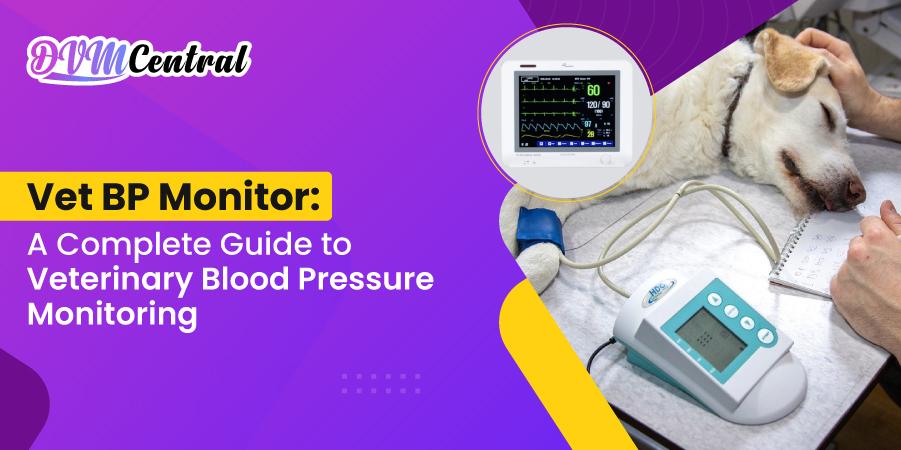
Blood pressure is one of the vital signs in veterinary medicine that can indicate major health problems long before a pet shows obvious signs of illness. A reliable vet BP monitor makes taking blood pressure an easy part of wellness exams, senior screenings, and anesthesia monitoring.
This guide covers veterinary blood pressure monitors, how the main types work, how to interpret readings, and what to consider when choosing one for your practice.
What is a Vet BP Monitor?
A vet blood pressure monitor is a device built or calibrated specifically to measure arterial blood pressure in dogs, cats, and other companion animals. Unlike human BP monitors, veterinary blood pressure machines are designed for smaller and more varied limb sizes and can account for faster heart rates, movement, and stress that can affect readings in animals.
Most clinics use either Doppler or oscillometric devices. Both measure blood pressure indirectly with a cuff placed around a limb or tail.
The Importance of BP Monitoring in Veterinary Practice
Untreated hypertension can damage the eyes, kidneys, heart, and brain. These effects are known as target organ damage. Regular blood pressure checks can help identify high blood pressure early, particularly in patients with:
- Diabetes mellitus
- Hyperthyroidism (cats)
- Cushing's disease (hyperadrenocorticism)
- Chronic kidney disease (CKD)
- Preexisting cardiac disease
- Senior wellness patients, as per AAHAs recommendation to include BP as part of senior and geriatric screening panels
Anesthetized patients also need regular BP monitoring throughout the procedure, typically every 3 to 5 minutes with NIBP or continuously with direct arterial monitoring.
What is a Normal Blood Pressure Reading for Dogs and Cats?
In dogs and cats, a systolic blood pressure below 140 mmHg is considered normal. The 2018 ACVIM consensus statement classifies systolic BP into four categories based on the risk of target organ damage:
|
Category |
Systolic BP (mmHg) |
Risk of Target Organ Damage |
|
Normotensive |
Less than 140 mmHg |
Minimal |
|
Pre-hypertensive |
140 to 159 |
Low |
|
Hypertensive |
160 to 179 |
Moderate |
|
Severely hypertensive |
180 or higher |
High |
The same systolic blood pressure categories are used for dogs and cats, with the risk of target organ damage increasing as blood pressure rises. Sighthounds are an exception and may have systolic blood pressure values about 20 mmHg higher in each category.
A single high reading does not always mean a patient has hypertension. Stress can temporarily raise blood pressure in veterinary patients, so repeated readings are recommended, ideally in a quiet setting before other examination procedures. Taking several consecutive readings and using the lowest consistent values can help reduce the effect of anxiety on the results.
What are the Types of Veterinary Blood Pressure Monitors?
There are four general categories of veterinary blood pressure monitor technology, ranging from bedside indirect devices to the invasive monitors used mainly in research and critical care.
|
Type |
How it works |
Best suited for |
Limitations |
|
Doppler Ultrasonic |
A probe detects blood flow over an artery while a cuff inflates and deflates. The systolic pressure is read when blood flow returns as the cuff pressure falls. |
Cats, small or toy breed dogs, and patients with weak or irregular pulses |
Requires practice to position the probe correctly. In most clinical use, it provides systolic pressure only. |
|
Oscillometric (Standard) |
Cuff sensors detect pressure changes due to arterial pulsations and compute systolic, diastolic, and mean arterial pressure automatically. |
Routine wellness checks, general practice, and larger dogs |
Readings may be less reliable in very small patients, cats, animals with arrhythmias, or patients with low blood flow. |
|
High-Definition Oscillometry (HDO) |
Uses sensitive cuff sensors to capture detailed pulse wave signals and calculate blood pressure from the waveform. |
Practices that want more detailed readings across different species and patient sizes |
Usually costs more than standard oscillometric monitors. |
|
Multiparameter Monitor |
Combines blood pressure measurement with other vital signs, such as ECG, SpO2, respiratory rate, temperature, and sometimes capnography, depending on the model. |
Anesthesia, surgery, hospitalized patients, and critical care |
Readings depend on the monitor and cuff used, and the additional features can increase the cost. |
|
Direct or Invasive (Arterial Catheterization) |
An arterial catheter connects to a pressure transducer and provides continuous, beat-to-beat blood pressure readings. |
Anesthesia, critical care, and research or referral settings |
Provides highly accurate readings but requires arterial access, monitoring equipment, and trained staff. |
Doppler, oscillometric, HDO, and multiparameter BP monitors are the most common choices in day-to-day general veterinary practice, so it is worth understanding how each performs.
How Do Non-Invasive BP Monitors Work?
Veterinary non-invasive blood pressure monitors use a cuff placed around a limb or tail to measure blood pressure without placing a catheter inside an artery. The exact process depends on the type of monitor, with Doppler, oscillometric, HDO, and multiparameter systems using different methods to detect and calculate blood pressure.
Doppler Monitors
Doppler monitors detect blood flow through an artery as the cuff deflates, allowing the practitioner to read the systolic pressure.
- Probe placement: The ultrasonic probe is placed over an artery, usually on the front or hind paw or the tail.
- Blood flow detection: As the cuff deflates, the probe detects returning blood flow and produces an audible whooshing sound.
- Blood pressure reading: The practitioner notes the cuff pressure when the sound first returns, giving the systolic blood pressure.
- Best suited for: Cats, small dogs, and patients with weak pulses that may be difficult for oscillometric monitors to detect.
- Limitation: The practitioner needs some practice to position the probe and interpret the reading correctly.
Oscillometric Blood Pressure Monitors
Oscillometric monitors automatically detect pressure changes in the artery and calculate several blood pressure values.
- Cuff inflation: The monitor automatically inflates the cuff around a limb or tail.
- Pulse detection: Sensors detect small pressure changes caused by arterial pulsations as the cuff deflates.
- Automatic readings: The monitor calculates systolic, diastolic, and mean arterial pressure, along with heart rate.
- Best suited for: Routine blood pressure checks and busy general practices.
- Limitation: Readings may be less reliable in very small patients, anxious or moving animals, and patients with weak blood flow or certain arrhythmias.
High-Definition Oscillometry (HDO) Monitors
HDO is an advanced form of oscillometric monitoring that captures more detailed information from the pulse waveform.
- Sensitive sensors: The cuff captures detailed pressure changes produced by arterial pulsations.
- Waveform analysis: The monitor analyzes the pulse waveform to calculate blood pressure.
- Detailed readings: HDO systems can provide more information about the pulse signal than standard oscillometric devices.
- Best suited for: Practices that monitor a wide range of patient sizes and want more detailed blood pressure data.
- Limitation: HDO equipment is generally more expensive than standard oscillometric monitors.
Multiparameter Monitors
Multiparameter monitors bring blood pressure and other vital sign measurements together on one screen.
- Blood pressure: Most multiparameter monitors use an oscillometric cuff to measure blood pressure.
- Other measurements: They can also measure capnography, respiratory rate, oxygen saturation, temperature, and ECG, depending on the model.
- Application: Ideal for anesthesia, surgery, hospitalized patients, and critical care.
- The main benefit: The vet can get multiple measurements of several patients from one device.
- Limitations: Availability of features and their level of accuracy differ from one model to another, and they may be more expensive than standalone BP units.
How Do Direct or Invasive BP Monitors Work?
Direct blood pressure monitoring measures pressure inside an artery through a catheter connected to a pressure transducer.
- Catheter placement: A catheter is placed directly into an artery.
- Continuous readings: The transducer measures arterial pressure continuously, providing beat-to-beat readings.
- Best suited for: high-risk anesthesia, critical care, and research settings.
- Main advantage: Provides continuous arterial pressure data.
- Limitation: It is invasive and needs arterial catheterization, additional equipment, and trained personnel.
How Often Should Blood Pressure Be Measured in Veterinary Patients?
The recommended frequency of blood pressure checks varies depending on the pet's age, overall health, and risk of hypertension.
- Healthy adult pets: Usually checked during annual wellness visits.
- Senior pets: Blood pressure can be included in wellness screening every 6 to 12 months as per AAHA senior care guidance.
- Pets with CKD, hyperthyroidism, diabetes, or Cushing's disease: Blood pressure may be checked every 3 to 6 months, or more often based on the condition and treatment plan.
- Pets taking blood pressure medication: Recheck after starting or changing the dose, then continue periodic checks to see whether blood pressure remains controlled.
- Anesthetized or critically ill patients: Blood pressure is monitored continuously or at frequent intervals throughout anesthesia or hospitalization.
What Should You Look for When Buying a Veterinary Blood Pressure Monitor?
A veterinary BP monitor is something your team may use on patients ranging from tiny kittens to large dogs, so the right device should fit your patient population, workflow, and monitoring needs.
Before buying, consider these factors:
- Veterinary validation: Choose a monitor tested for veterinary patients and check whether it has been evaluated in dogs, cats, or both.
- Cuff sizes: Choose a monitor with cuff sizes that fit the patients you see, from kittens and small dogs to large-breed dogs.
- Measurement method: Choose Doppler, oscillometric, HDO, or multiparameter based on your practice needs.
- Ease of use: Look for simple controls, a clear display, and easy cuff changes for routine measurements.
- Reading consistency: Look for features such as averaging, memory, and adjustable measurement cycles when taking several readings.
- Data storage: Memory, trend displays, printing, or software connections can make it easier to compare readings over time.
- Portability: Consider the monitor's size, battery life, durability, and ease of cleaning if it will be moved around the clinic.
- Calibration and maintenance: Check the manufacturer's guidelines for calibration, servicing, and routine testing.
- Warranty and support: Check the warranty, replacement parts and cuffs, and technical support available from the manufacturer.
- Long-term cost: Consider replacement cuffs, sensors, batteries, software, calibration, and servicing in addition to the purchase price.
Veterinary Blood Pressure Monitors at DVM Central
DVM Central carries a range of Doppler, HDO, and multiparameter blood pressure monitors, built for the pace of general practice, internal medicine, and anesthesia monitoring.
Whether you're outfitting a new clinic or replacing an aging unit, our catalog is organized to help you compare features, cuff compatibility, and pricing in one place.
Doppler Blood Pressure Unit
VetDop2 Doppler Blood Pressure Unit is a portable veterinary monitor designed to measure systolic blood pressure in dogs, cats, and other animals. With a sensitive 9.6 MHz transducer, rechargeable battery, and six animal cuff sizes, it is suited for routine BP checks, surgical monitoring, and blood flow assessment.
HDO Vet BP Monitor
HDO Vet BP Monitor uses high-definition oscillometry to capture and display pulse wave data in real time. The monitor can store multiple readings and average values for later review, while PC connectivity allows pulse wave data to be viewed and analyzed in detail.
Multiparameter Veterinary Monitors
Multiparameter monitors combine blood pressure with other vital sign measurements, making them useful for anesthesia, surgery, treatment areas, and hospitalized patients. Here are three options to consider:
Offers NIBP, SpO2, temperature, respiration, heart rate, and ECG, with optional EtCO2. It supports up to eight waveforms, includes a built-in printer, and can be mounted on a rolling stand or wall.
Provides NIBP, SpO2, respiration, temperature, and ECG, with optional EtCO2.
It features up to eight waveforms, a built-in printer, a rechargeable lithium-ion battery, and a portable design.
A compact multiparameter option with SpO2, respiration, temperature, ECG, and optional EtCO2. It supports up to eight waveforms, includes a built-in printer, and can be used on a rolling stand or wall mount.
Conclusion
Blood pressure monitoring is a practical part of veterinary care, from routine wellness visits to anesthesia and critical care. Depending on the patient and the type of monitoring required, Doppler, oscillometric, HDO, multiparameter, and direct monitoring systems all have their place in practice.
When choosing a veterinary BP monitor, consider the patients you see, cuff sizes, measurement method, ease of use, data storage, portability, and ongoing equipment support. A monitor that fits your practice and your team workflow can help make regular BP checks easier to incorporate into everyday patient care.
FAQs
Can You Use a Human Blood Pressure Monitor on an Animal?
Generally not. Human blood pressure monitors are developed for humans and are not accurate for animals. Using a pet blood pressure monitor with the correct animal cuff size will give you more reliable results.
What is the most accurate way to measure blood pressure in animals?
Direct arterial catheterization is the reference method for measuring blood pressure, but it is invasive and mainly used in critical care, anesthesia, and research. For routine veterinary practice, a validated Doppler or oscillometric monitor is generally used.
Is Doppler or oscillometric better for cats?
Doppler is often preferred for cats because it can detect weaker pulses that some oscillometric monitors may miss. However, validated oscillometric and HDO monitors can also be used in feline patients.
What size cuff should I use for a small dog or cat?
Choose a cuff with a width that is about 30 to 40 percent of the limb or tail circumference at the measurement site. Having several cuff sizes available makes it easier to choose the right cuff for each patient.
How many blood pressure readings should be taken per session?
Take several consecutive readings and allow the patient time to settle between measurements. If following the ACVIM protocol, discard the first reading and average the next 5 to 7 consistent readings.
Can I use a human blood pressure cuff on my pet at home?
Human BP devices are not designed or validated for dogs and cats and may produce unreliable readings. For home monitoring, use veterinary-specific equipment and have the results reviewed by a veterinarian.
What blood pressure reading is considered hypertensive in dogs and cats?
According to ACVIM categories, a systolic blood pressure of 160 mmHg or higher falls into the hypertensive range. A reading of 180 mmHg or higher is classified as severe hypertension and carries a higher risk of target organ damage.
How often should senior pets have their blood pressure checked?
AAHA senior care guidance recommends including blood pressure in wellness screening every 6 to 12 months for senior and geriatric pets. Pets with conditions such as CKD or hyperthyroidism may need checks more often.
Do all veterinary clinics need a blood pressure monitor?
A BP monitor can be useful for practices that see senior pets, manage chronic diseases, or perform anesthesia. The type of monitor needed depends on the patients and procedures handled by the practice.


DVM Central is the trusted veterinary marketplace connecting suppliers, veterinarians, and pet owners, promoting direct buying for quality animal health products, and simplifying veterinary supply transactions.


%20Blog_Explore%20TicklessUSA%20Chemical-Free%20Tick%20%26%20Flea%20Protection-thumbnail-1790176693.jpg&w=3840&q=75)

%20Blog%20-%20Discover%20Thermotex%20Therapy%20Systems-thumbnail-1789135670.jpg&w=3840&q=75)


