


Feline Thyroid Testing: How Veterinarians Diagnose and Monitor Hyperthyroidism

Senior cat, eating well, losing weight? This behavior points toward hyperthyroidism. However, kidney disease, diabetes, and GI disorders can also have the same signs and symptoms.
So, how do vets distinguish hyperthyroidism from other health conditions?
Well, reliable feline thyroid testing helps vets confirm the diagnosis, start the right treatment, and catch hidden problems early.
This guide explains feline hyperthyroidism, how to read results, and how to monitor cats after treatment begins. It also shows where the HealVet Feline T4 Test Kit from DVM Central fits into your clinic.
What Is Feline Hyperthyroidism?
Feline hyperthyroidism is an endocrine disorder in which the thyroid gland makes too much thyroid hormone. In most cats, a benign growth on one or both thyroid lobes is the cause. Thyroid cancer is rare, seen in only a small minority of cases.
No one knows exactly why these growths form. Diet, environment, and genetics have all been studied, but none is proven to be the single cause.
The effect is clear. Too much hormone speeds up the whole body. The heart works harder, and metabolism runs fast. Left untreated, the disease can damage the cat’s heart and shorten its life.
Hyperthyroidism is very common in older cats. Most cases appear in middle-aged and senior cats, often over 7 years old. Young cats rarely get it, which is why many clinics screen their senior patients.
Symptoms of Hyperthyroidism in Cats
The classic sign is weight loss with a big appetite. The symptoms of hyperthyroidism in cats develop slowly, and owners often miss them for months because the cat still seems energetic.
Common signs include:
- Weight loss despite a good appetite
- Drinking and urinating more
- Vomiting or loose stool
- Restlessness or nighttime yowling
- A greasy or unkempt coat
- A fast heart rate or a new heart murmur
- A lump you can feel in the neck
Some cats show opposite signs. They become quiet, stop eating, and seem tired. This is called apathetic hyperthyroidism, and it often means there is another illness too.
Because these signs overlap with other senior cat diseases, a cat thyroid blood test is needed to confirm the cause.
How Do Veterinarians Diagnose Hyperthyroidism?
Vets put several pieces together. A high total T4 in a cat with matching signs is usually enough to confirm the disease. The other tests show how the rest of the body is doing.
A typical checkup includes:
- History and a full physical exam, including neck palpation, heart auscultation, and weight
- A total T4 test
- A CBC, chemistry panel, and urinalysis
- A blood pressure reading
What Does a T4 Test for Cats Tell You?
A feline T4 test measures thyroxine, the thyroid's main hormone. A high value of T4 in the test result supports a diagnosis of hyperthyroidism. The test is quick, affordable, and easy to run in the clinic or at a reference lab, which makes it the first choice for thyroid testing in cats.
Reference ranges differ between labs and test systems. A value that looks high on one report may be normal on another, so always compare the result to the range printed on your own report or kit insert.
Total T4 vs. Free T4: What’s the Difference?
Total T4 measures all the thyroxine in the blood, most of which is attached to proteins. A free T4 test in cats measures only the small unbound part, which is the active hormone. Equilibrium dialysis is the most trusted method, and it is usually sent to an outside lab.
Free T4 should never be read alone. Cats with other illnesses can have a high free T4 even when the thyroid is normal, so always read it together with total T4 and the clinical picture.
|
Test |
What it measures |
When it helps |
|
Total T4 |
All thyroxine in the blood |
First-line screening and diagnosis |
|
Free T4 |
Active, unbound thyroxine |
Cats with signs but a normal total T4 |
|
Other tests |
Extra thyroid information |
Selected cases, often with specialist input |
How Do Veterinarians Read Feline Thyroid Test Results?
Vets first compare the result with the lab’s reference range, then interpret it in the context of the cat’s overall health and symptoms.
- High T4 with typical signs: Hyperthyroidism is very likely.
- Normal T4 with typical signs: The disease may still be present. Early disease can sit in the upper part of the normal range, and other illnesses can lower T4 and hide the problem.
- Low or low-normal T4 in a sick cat: Another illness may be lowering it.
- Very low T4 during treatment: The cat may be overtreated.
When the signs and the numbers do not match, you can:
- Repeat the total T4 in a few weeks
- Run a free T4 by equilibrium dialysis
- Track changes in weight, heart rate, and bloodwork
- Refer for thyroid imaging (scintigraphy) if the answer stays unclear
Veterinarians must not rule out thyroid disease based on one normal result. Cats with more than one illness are the hardest to read, so treat the whole cat, not just the lab value.
Why Kidney Function and Blood Pressure Matter
Hyperthyroidism can mask kidney disease. The extra hormone increases blood flow to the kidneys, so creatinine can look better than it really is. Once treatment lowers T4, the kidney problem may show up.
That is why vets often check creatinine, BUN, SDMA, and urine specific gravity before and after treatment. A cat with borderline kidney values may need a gentler dose or a different plan.
Blood pressure needs the same attention. High blood pressure is common in hyperthyroid cats, and it can appear or get worse after treatment. If left alone, it can damage the eyes, kidneys, brain, and heart. Check it at diagnosis and at every recheck.
How to Monitor Thyroid Levels During and After Treatment?
Monitoring answers two questions: is the treatment working, and is the cat safe? The goal is a T4 in the lower half of the reference range. Going too low causes hypothyroidism, which can worsen kidney values, so catching it early lets you adjust the plan.
Treatment options include
- Methimazole, given by mouth or on the skin
- Radioactive iodine therapy
- Surgical thyroidectomy
- A prescription iodine-restricted diet
The 2016 AAFP Guidelines on Feline Hyperthyroidism are a helpful guide for timing. Here is the general pattern:
|
Treatment |
Typical first recheck |
After that |
|
Methimazole |
About 2 to 3 weeks |
Every 3 to 6 months; once stable |
|
Radioactive iodine |
About 1 to 3 months |
Periodic T4 and kidney checks |
|
Thyroidectomy |
Soon after surgery, with calcium |
T4 and kidney checks over time |
|
Iodine-restricted diet |
Several weeks |
Periodic T4 and kidney checks |
At each visit, look beyond T4. Check weight, heart rate, blood pressure, and kidney values, and ask the owner about appetite, energy, and litter box habits. For cats on methimazole, also watch for vomiting, facial itching, and changes in blood counts or liver values.
Feline T4 Test Kit: Available at DVM Central
Rechecks, senior screenings, and pre-op bloodwork all land on the same busy schedule. A dependable T4 option close by makes it easier to test when the cat needs it, not just when time allows.
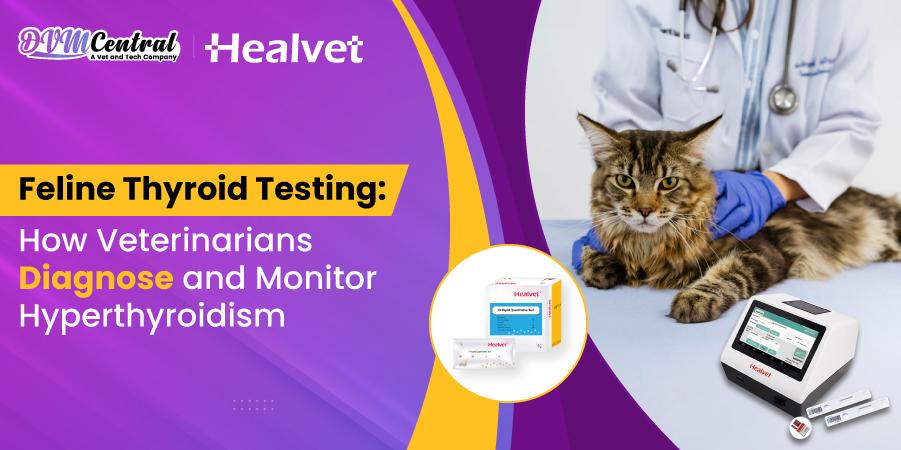
The HealVet Feline T4 Test Kit is a feline T4 test kit available through DVM Central. The product listing describes it as a test for thyroid hormone levels in cats. Listed uses include routine wellness exams, preoperative assessments, diagnosing conditions like hyperthyroidism, and ongoing monitoring of middle-aged and senior cats.
Before adding any T4 test to your practice, read the package insert. Check the sample type, the reference range, and the run time, and decide ahead of time when you would send a sample to an outside lab. To compare options, browse the full range on the HealVet USA, Inc. vendor page.
DVM Central offers a wide range of veterinary diagnostic products from HealVet USA Inc., including the HV FIA 3000 analyzer and test kits for canine, feline, equine, and bovine health covering thyroid function, cardiac markers, inflammation, pancreatic health, hormones, and more.
Conclusion
A single T4 number never tells the whole story. Pair it with history, exam findings, kidney function, and blood pressure, and a test kit becomes a tool that supports your judgment.
If you are building or updating your diagnostic lineup, explore the thyroid testing options on DVM Central and choose what suits your team and your patients.
Frequently Asked Questions
How accurate is a feline T4 test?
Total T4 is a reliable first test. Results can look normal in early disease or in cats with other illnesses, so repeat testing or a free T4 may be needed.
What is the difference between total T4 and free T4?
Total T4 counts all the thyroxine in the blood, while free T4 counts only the active, unbound part.
How often should thyroid levels be tested in cats?
Healthy senior cats are often screened yearly or twice yearly. Treated cats need a first recheck within weeks, then longer intervals once stable.
How are cats monitored after treatment?
Vets track T4, weight, heart rate, blood pressure, and kidney values. The schedule depends on the treatment type.
Why check kidney function in a hyperthyroid cat?
Hyperthyroidism can mask kidney disease until treatment brings T4 down. Checking before and after treatment helps you dose safely.


DVM Central is the trusted veterinary marketplace connecting suppliers, veterinarians, and pet owners, promoting direct buying for quality animal health products, and simplifying veterinary supply transactions.


